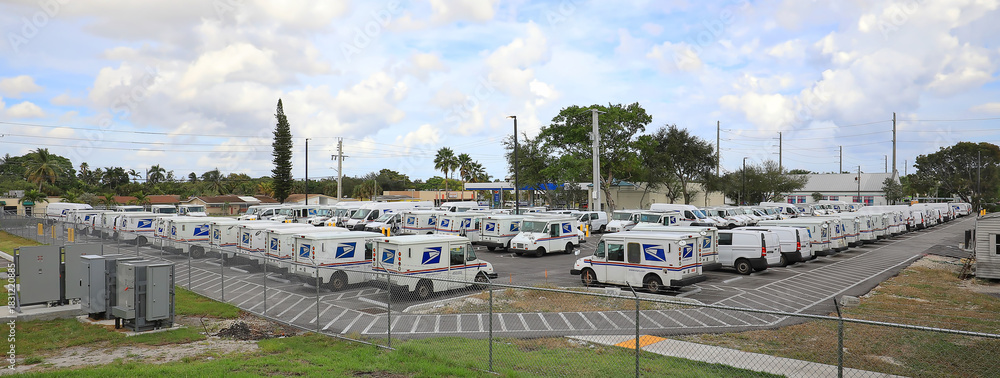
On March 25, 2026, the United States Postal Service announced what it has never done in its 250-year history: a fuel surcharge on parcel shipments. Effective April 26, 2026, every USPS parcel — Ground Advantage, Priority Mail, Priority Mail Express, Parcel Select, and all other competitive products — will carry an 8% surcharge on the base mailing charge.
No exemptions. No negotiated exceptions. No grandfathering. Every Negotiated Service Agreement (NSA), every commercial pricing tier, every volume commitment — all of it now carries an additional 8% on top of the contractual rate.
This is not speculation or analysis. This is a mandate from USPS leadership, communicated directly to the field with explicit instructions that no exceptions will be granted — at any level, for any customer. This is a structural shift in how the Postal Service prices its services, and it will ripple across the entire U.S. parcel market.
How We Got Here
The Postal Service’s parcel strategy over the past several years was built on a bold premise: aggressive pricing could pull volume from UPS and FedEx, and scale would eventually deliver profitability.
Under Postmaster General Louis DeJoy’s “Delivering for America” plan, USPS invested heavily in infrastructure, expanded its Ground Advantage service to compete directly with FedEx Ground and UPS Ground, and began offering NSAs with pricing that undercut the private carriers by wide margins. The strategy worked — at least on the volume side. USPS successfully attracted significant parcel volume from e-commerce shippers looking for a lower-cost alternative.
But the economics never quite caught up. Parcel volume grew, but so did costs. Fleet modernization, facility upgrades, and the operational complexity of handling a growing mix of parcels alongside flat and declining mail volume strained the Postal Service’s finances.
The rollout of Ground Advantage NSAs was, to put it charitably, uneven. Customers were onboarded with aggressive pricing — and critically, most were sold on the premise that their NSA rates were fixed. Even though the agreement language technically grants USPS authority to adjust pricing, the sales motion emphasized stability and cost certainty. That framing is important context for what just happened. The technology infrastructure was not ready. The support model was not scaled. And the operational savings from cutting out last-mile partners did not materialize fast enough to justify the rates being offered.
Then came the headwinds — and they arrived in rapid succession. Tariffs disrupted supply chains and compressed e-commerce demand. Amazon — USPS’s largest customer, representing an estimated $5–6 billion in annual revenue — began actively reducing its USPS volume after contract negotiations broke down in late 2025, with plans to cut shipments by at least two-thirds before its contract expires in September 2026. Fuel costs soared as geopolitical instability in the Middle East drove diesel prices higher. And the financial cliff that had been approaching for years suddenly arrived.
The 8% surcharge is the bill for all of it. And it is being handed to the customers.
It is worth noting, however, that the economics of this situation may eventually force USPS to offer some relief to its largest volume shippers. If USPS hopes to retain meaningful parcel business — particularly in a market where Amazon is already walking away — it will need to find ways to keep its highest-volume NSA customers from doing the same. But for now, the mandate is 8%, no exceptions.
Adding Fuel to the Fire
The USPS fuel surcharge is not arriving in a vacuum. It is arriving on top of a tariff regime that has already been battering e-commerce businesses for months.
The de minimis exemption — the provision that allowed shipments under $800 to enter the U.S. duty-free — has been eliminated. Import duties ranging from 15% to over 30% now apply across high-volume categories like electronics and apparel. Brokerage fees, customs processing costs, and compliance overhead have all increased. For e-commerce brands that source internationally, landed costs have jumped dramatically, and many have already been forced to raise consumer prices or absorb margin erosion.
Now add 8% to their shipping costs.
For shippers who ship at least 500,000 packages per year through USPS, this surcharge translates to annual cost increases well into six figures. That is before the July rate increase that USPS has already signaled is coming separately from this surcharge. And it is before factoring in the carrier GRIs, the accessorial creep, and the fuel surcharges at UPS and FedEx that have been climbing all year.
“My fear is that the changes [DeJoy] has made will fundamentally shift the price floor higher and lead to higher costs to companies and ultimately consumers.”
— Brandon Staton, as told to The Wall Street Journal, February 2025
The compounding is relentless. Tariffs raise the cost of goods. Fuel surcharges raise the cost of moving those goods. And here is a critical detail that most shippers miss: at UPS and FedEx, fuel surcharges are not calculated on the base transportation charge alone. They are calculated as a percentage of the transportation charge plus all transportation-related surcharges — residential delivery surcharges, delivery area surcharges, additional handling, and others. Every time those ancillary surcharges go up, the fuel surcharge goes up with them, even if fuel prices hold steady. It is a surcharge on surcharges. Layer the GRI on top, and each increase multiplies the one before it.
Meanwhile, customers are already pulling back. Markets are in correction territory, consumer confidence is eroding, and businesses across e-commerce are operating defensively. The USPS fuel surcharge just tightened the squeeze another turn.
Why This Ripples Across the Entire Market
The Postal Service anchors the price floor for the entire parcel market. When the lowest-cost carrier raises prices, the competitive pressure on every other carrier eases.
UPS and FedEx have maintained fuel surcharges for decades. Those surcharges are indexed to diesel prices and adjusted weekly, and they have climbed aggressively in recent months — as the chart below shows:
These numbers have moved sharply. At the beginning of the year, UPS Ground fuel surcharges sat at 20.75%. By March 30, they had climbed to 27.0% — a 6.25 percentage point increase in under three months. FedEx Ground followed a similar trajectory, rising from 21.25% to 26.5%. Air surcharges moved even more violently: UPS Air jumped from 19.75% to 30.75%, and FedEx Air from 20.25% to 30.25%.
The fuel surcharge index tables themselves have been quietly ratcheted upward multiple times in recent years. In late 2025 alone, both carriers increased their ground fuel surcharge calculations by 1–1.5 percentage points — separate from their General Rate Increases. Shippers are paying more in fuel surcharges even when fuel prices stay flat. The surcharge has evolved from a cost recovery mechanism into a profit center.
USPS has never had a fuel surcharge before. Its 8% increase, while significant for USPS shippers, is still a fraction of what the private carriers charge.
UPS and FedEx shippers should not assume this does not affect them. The private carriers just watched their lowest-cost competitor become 8% more expensive overnight. That is pricing relief they did not have to negotiate for. They will respond — not by lowering their rates, but by finding less reason to sharpen them. The floor just moved up. The ceiling will follow.
What the Field Is Saying
Within hours of the announcement, USPS sales representatives were already fielding calls from anxious NSA customers. The message from the field is consistent: this came from the top, with no exceptions and no flexibility.
This is not opinion or secondhand interpretation. The directive, as communicated to account holders, has been unambiguous: “Do not ask me for an exception. You will not get it. From the very top.”
Leadership acknowledges this will “ruffle some feathers” and is prepared to “monitor the impacts.” But the mandate is clear: 8%, across the board, no carve-outs.
There is another detail worth noting: the costs will not appear as a separate fuel surcharge line item on invoices, which is what most shippers are accustomed to seeing from UPS and FedEx. Instead, the 8% will be baked directly into the package price. That is going to create confusion for finance teams trying to isolate and track the impact, and it will make apples-to-apples cost comparisons between carriers significantly more difficult.
For NSA customers who negotiated rates with the expectation that their contracts would insulate them from this kind of scenario — and who were explicitly told that their pricing was fixed — this is a breach of trust, even if it is not technically a breach of contract. The agreement language gives USPS authority to change terms, but the sales motion sold certainty. That disconnect raises serious questions about the reliability of USPS negotiated agreements going forward.
The Lightweight Shipper Trap
One of the most underappreciated dynamics in the parcel market is the vulnerability of sub-1-pound shippers.
For years, FedEx and UPS have effectively turned away lightweight volume. Minimum charges, dimensional weight rules, and accessorial structures all conspire to make sub-1-pound packages uneconomical on the private carrier networks. That left USPS as the de facto — and often the only — option for lightweight shipments.
Perhaps FedEx and UPS understood something the broader market did not: that the USPS pricing model for lightweight parcels was unsustainable and that any carrier relying on razor-thin margins in that segment would eventually face a reckoning. If so, this is that reckoning.
Shippers who built their fulfillment strategies around USPS as a low-cost lightweight solution are now staring at an 8% cost increase with no viable alternative. The regional carriers that play in this space are limited in geography. Consolidators have their own cost pressures. And the private duopoly has never wanted this freight.
These are also the same shippers most exposed to the tariff changes. Lightweight, low-cost goods — cosmetics, supplements, accessories, small electronics — are the categories hit hardest by the elimination of de minimis and the new import duties. The same products that cost more to source now cost more to ship. It is a vise, and it is tightening from both sides.
The Support and Technology Gap
The Postal Service’s technology and support infrastructure is not built for the level of sophistication that modern parcel shippers require.
USPS’s data ecosystem is fragmented. Its invoicing formats are inconsistent. Its reporting tools are limited. For many shippers — especially smaller ones — the only way to get actionable cost and performance data is through third-party platforms. That is not a knock on USPS so much as a reflection of the constraints under which they operate. But it means that when a change like this hits, many shippers lack the tools to quickly model the impact, renegotiate, or shift volume.
And the smaller the customer, the less support they get. Large NSA accounts at least have a sales rep to call — even if that rep cannot offer relief. Small and mid-market shippers are left to figure it out on their own.
What Comes Next
USPS has framed this surcharge as a “bridge to a permanent mechanism to reflect market conditions.” That language matters. This is not a one-time adjustment. This is the opening move toward a permanent fuel surcharge structure that mirrors what UPS and FedEx have maintained for years. The days of fuel costs being absorbed into base rates at the Postal Service are over.
This 8% is also separate from the regular rate increases that typically occur two to three times per year. Another rate adjustment is expected in July, on top of this surcharge. Layer that on top of the tariff environment, the carrier GRIs, and the private carrier fuel surcharges, and the cost structure for 2026 and 2027 bears little resemblance to what shippers budgeted for.
The USPS bet big on a growth strategy that required flawless execution in a stable environment. What materialized instead was a leadership transition, geopolitical upheaval, a tariff regime that suppressed e-commerce demand, and a fuel crisis that made the pricing model untenable. Every one of those headwinds was foreseeable in some form. The combination was not — but the customers who signed NSAs based on a different set of assumptions are the ones holding the bag.
What Shippers Should Do Right Now
Model the total cost impact. Not just the USPS surcharge in isolation, but the full stack: tariff increases on products, carrier GRIs, fuel surcharges across all carriers, and accessorial creep. The true cost-to-deliver today versus six months ago may be unrecognizable.
Revisit the carrier mix. An 8% USPS increase changes the break-even point between USPS and other options for certain weight breaks, zones, and service levels. What was cheapest last month may not be cheapest next month.
Renegotiate proactively. UPS and FedEx contracts coming up for renewal now carry new leverage. The private carriers know their pricing just got comparatively more competitive against USPS. That advantage should be captured in the next negotiation — not left on the table.
Stress-test pricing strategy. If tariffs raised product costs and fuel is now raising shipping costs, current pricing may no longer be viable. The math should be run before the market forces the decision.
Demand visibility. Without granular cost-per-package data across all carriers, there is no way to understand where the money is going. The analytics infrastructure — whether through a platform, a consultant, or an internal build — is no longer optional.
Scenario-plan for permanence. USPS said this is a bridge. Bridges become highways. The 2027 budget should assume a permanent USPS fuel mechanism and at least one additional rate increase before year-end.
The Bottom Line
The USPS was the last holdout in a market where fuel surcharges have been standard practice for decades. That era is over.
But this is about more than a fuel surcharge. This is the culmination of a strategy that over-promised and under-delivered, executed during a period of unprecedented disruption. Tariffs are compressing product margins. Fuel is compressing shipping margins. And a Postal Service that positioned itself as the affordable alternative is now telling its customers that affordability has limits.
The costs always flow downhill. They flow from OPEC to the pump, from the pump to the carrier, from the carrier to the shipper, and from the shipper to the customer. Every layer in that chain is passing through increases right now. What makes this moment different is that it is happening on every front simultaneously: fuel, tariffs, rates, and surcharges. All at once. All compounding.
The game is about to change.