What Are Peak Surcharges?
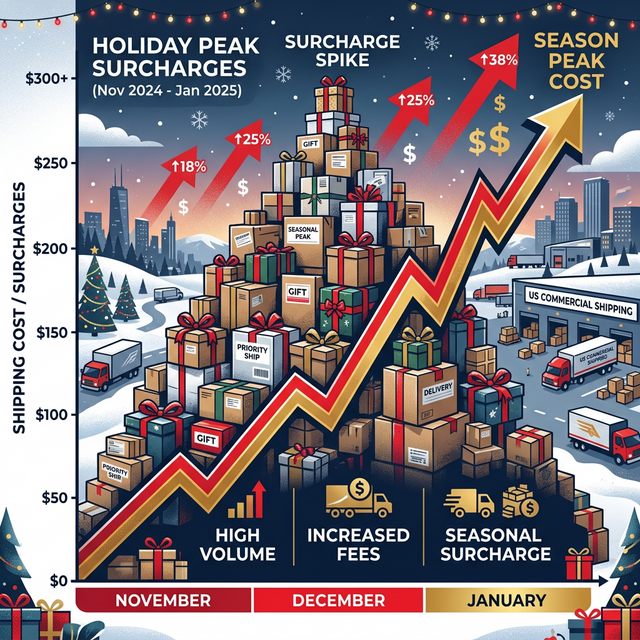
Peak surcharges are temporary, seasonal fees that UPS and FedEx impose during high-volume shipping periods — primarily the holiday season from October through January. These surcharges are designed to offset the cost of adding temporary workers, vehicles, and capacity during the busiest shipping weeks of the year.
Unlike permanent surcharges, peak surcharges have defined start and end dates and are announced several months in advance.
2025-2026 Peak Surcharge Timeline
Both carriers typically implement peak surcharges across several periods:
| Period | Approximate Dates | Intensity |
|---|---|---|
| Pre-Peak | Late October – early November | Low |
| Peak Season | Mid-November – late December | High |
| Post-Peak | Early January – mid-January | Moderate |
| Off-Peak | February – September | None |
The exact dates and surcharge amounts change each year. Carriers announce peak surcharges in August or September for the upcoming holiday season.
Types of Peak Surcharges
1. Peak Residential Surcharge
An additional fee on top of the standard residential delivery surcharge during peak season:
| Carrier | Peak Residential (per package) |
|---|---|
| UPS | $1.50–$2.50 |
| FedEx | $1.50–$2.50 |
2. Peak Commercial Surcharge
Applied to commercial deliveries during the busiest weeks:
| Carrier | Peak Commercial (per package) |
|---|---|
| UPS | $0.50–$1.50 |
| FedEx | $0.50–$1.50 |
3. Peak Large Package Surcharge
Additional fees for oversize and large packages during the peak season:
| Carrier | Peak Large Package (per package) |
|---|---|
| UPS | $30.00–$75.00 |
| FedEx | $30.00–$75.00 |
4. Demand Surcharge (High-Volume Shippers)
Applied to shippers whose weekly volume exceeds a baseline by a significant percentage. This targets the largest shippers who surge beyond their normal levels:
| Volume Increase vs. Baseline | Demand Surcharge |
|---|---|
| > 100% increase | $1.00–$2.00/pkg |
| > 200% increase | $2.00–$4.00/pkg |
| > 400% increase | $4.00–$7.00/pkg |
How Peak Surcharges Are Calculated
The key term is baseline volume. Carriers establish your normal shipping volume based on a reference period (typically February–March of the current year). During peak season, any volume above your baseline percentage may trigger demand surcharges.
Example
- Your baseline weekly volume: 2,000 packages
- Peak season weekly volume: 5,000 packages
- Increase: 150% above baseline
- Demand surcharge tier: $2.00/package on all packages (not just the incremental ones)
At $2.00 × 5,000 = $10,000 per week in peak surcharges alone. Over a 6-week peak period, that’s $60,000 in additional costs.
Industries Most Affected
Peak surcharges disproportionately impact:
- E-commerce and DTC brands: Holiday sales drive massive volume spikes
- Subscription boxes: Gift subscriptions surge in November–December
- Retail and wholesale: Inventory replenishment for holiday sales
- Specialty food and gifts: Holiday gift baskets, chocolates, and perishables
Strategies to Manage Peak Surcharges
1. Spread Holiday Shipments Earlier
Encourage early ordering through “ship by” deadlines and early-bird promotions. Shipping inventory before the peak surcharge period begins can save significantly.
2. Negotiate Peak Surcharge Caps or Waivers
Some carrier agreements include:
- Peak surcharge caps: Maximum per-package amount during peak
- Partial waivers: Exemption from residential peak surcharges
- Baseline adjustments: Higher baseline volumes to prevent demand surcharges from triggering
3. Use Alternative Carriers During Peak
Regional carriers, USPS, and postal-injection services typically have lower or no peak surcharges. Shifting a portion of holiday volume to these alternatives can reduce aggregate peak costs.
4. Manage Your Volume Baseline
Since demand surcharges are calculated against your baseline, building a higher baseline earlier in the year through steady volume growth reduces the percentage increase during peak.
5. Communicate with Your Carrier Rep
Proactive communication about expected peak volumes can sometimes result in temporary rate adjustments or capacity guarantees that offset surcharges.
Year-Round Demand Surcharges
In recent years, carriers have begun applying demand surcharges outside the traditional holiday peak. Events like Amazon Prime Day, back-to-school season, and supply chain disruptions can trigger mid-year demand surcharges. The key difference:
- Peak surcharges: Announced in advance with fixed dates
- Demand surcharges: Can be implemented with shorter notice based on network capacity
The Bottom Line
Peak surcharges are seasonal but significant — they can add 5–15% to your total shipping costs during the holiday season. The most effective mitigation is a combination of early shipping incentives, negotiated caps, and carrier diversification. Start planning for peak surcharges in August, not November.
Want to see how seasonal patterns affect your shipping costs? Upload one invoice to ShipMint’s Instant Analysis for trend analysis — free.