Why Parcel Auditing Matters
Industry estimates suggest 2–5% of carrier invoice charges contain errors — and the vast majority are in the carrier’s favor. For a shipper spending $100,000/month on shipping, that’s $2,000–$5,000 per month in refundable overcharges.
Parcel auditing is the process of systematically reviewing carrier invoices to identify and recover these overcharges.
The Most Common Billing Errors
1. Late Delivery (GSR) — Highest Volume
Express packages delivered after the guaranteed commit time but not credited. This is the single largest category of unclaimed refunds.
Recovery: Full refund of transportation and fuel charges.
2. Duplicate Charges
The same tracking number billed twice, or multiple charges for the same service on a single package.
Recovery: Full credit for the duplicate charge.
3. Incorrect Weight/DIM
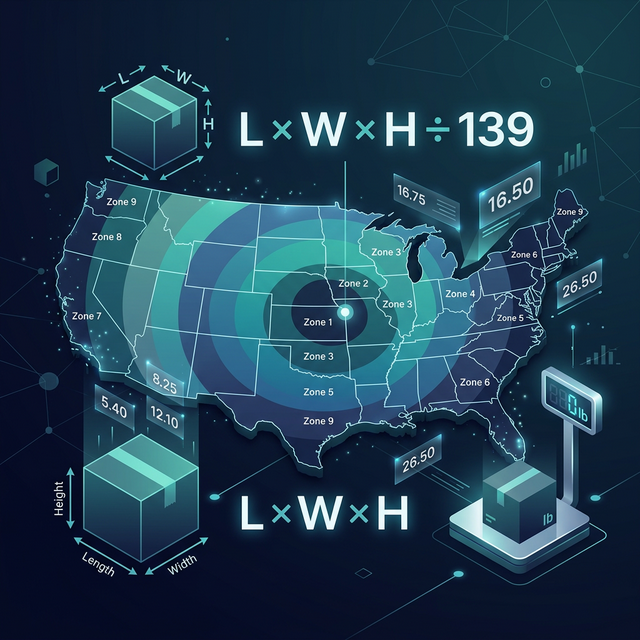
Carrier’s automated scanner records dimensions larger than the actual package, inflating the DIM weight and therefore the base rate.
Recovery: Rate adjustment to correct weight; requires measurement evidence.
4. Missing Contract Discounts
Negotiated discounts not applied — often triggered by account changes, system updates, or new service additions.
Recovery: Retroactive discounts applied for the affected billing period.
5. Residential Misclassification
Commercial business addresses classified as residential by the carrier’s database, triggering a $6.45–$6.95 surcharge.
Recovery: Residential surcharge credit for misclassified packages.
6. Incorrect Surcharges
Surcharges applied that shouldn’t be — e.g., DAS on a non-DAS zip code, or AHS on a package that doesn’t exceed thresholds.
Recovery: Full surcharge credit.
7. Void/Unused Labels
Shipping labels created but never used (package never entered the carrier network), yet still billed.
Recovery: Full credit for the unbilled label.
8. Service Failure Without Credit
The carrier experienced a service failure (lost package, significant damage) but didn’t automatically issue a credit.
Recovery: Full refund of transportation charges.
Manual vs. Automated Auditing
| Approach | Pros | Cons |
|---|---|---|
| Manual review | No cost, full control | Time-intensive, miss most errors |
| Spreadsheet analysis | Better coverage | Still labor-intensive, skill-dependent |
| Automated audit tools | 95%+ error detection, fast | Monthly cost, requires data integration |
| Third-party audit firms | No upfront cost (contingency) | Give up 30–50% of recovered savings |
When Manual Works
- Below 100 packages/week
- Simple service mix (Ground only)
- Dedicated staff time available
When Automation Is Better
- 500+ packages/week
- Multiple services and carriers
- No dedicated audit staff
How to Start Auditing
Step 1: Get Your Data
Download invoice detail files (CSV/Excel) from UPS Billing Center or FedEx Billing Online.
Step 2: Check the Easy Wins
Start with the highest-ROI checks:
- Late deliveries: Compare actual delivery time vs. commit time for all express packages
- Duplicate charges: Sort by tracking number, look for duplicates
- Void labels: Identify labels with no delivery scan
- Residential classification: Spot-check commercial addresses flagged as residential
Step 3: File Claims
For each identified error, file a claim through the carrier’s online portal, phone support, or API. Document everything.
Step 4: Track Results
Maintain a log of claims filed, approved, and denied. Track your recovery rate over time.
What Recovery Rates Look Like
| Audit Category | Typical Recovery Rate |
|---|---|
| Late delivery (GSR) | 90%+ if filed within 15 days |
| Duplicate charges | 95%+ with tracking number evidence |
| Void labels | 95%+ with scan evidence |
| DIM weight disputes | 40–60% (carrier usually wins) |
| Residential misclassification | 50–70% |
| Overall | 2–5% of total invoice value |
The Bottom Line
Parcel auditing isn’t glamorous, but it’s high-ROI. Every dollar recovered goes straight to your bottom line. Start with late delivery refunds and void labels — they’re the easiest to identify and have the highest approval rates. As volume grows, automate the process.
ShipMint automates parcel auditing across 6 categories. Upload one invoice to Instant Analysis to see your recovery opportunities — free.