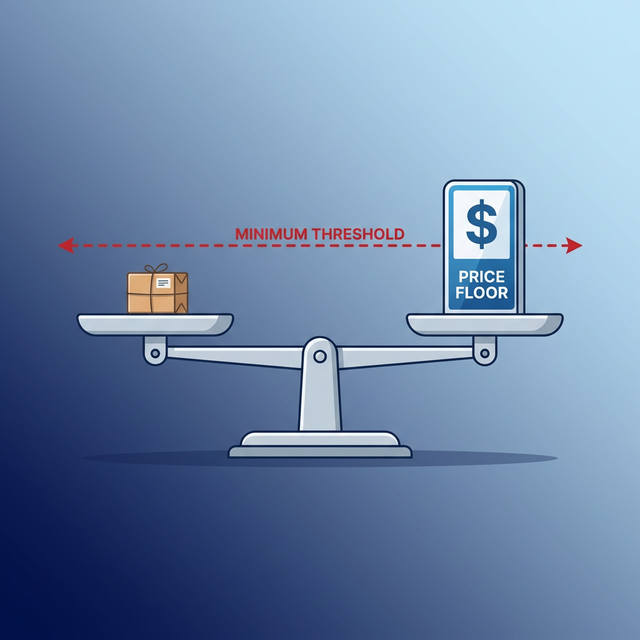
What Are Minimum Charges?
A minimum charge is the lowest amount a carrier will charge for a single package, regardless of how light or small it is. Even if the calculated rate based on weight and zone would be lower, the minimum charge acts as a floor.
Think of it this way: there’s a baseline cost for a carrier to pick up, sort, transport, and deliver any package, no matter the size. The minimum charge ensures the carrier covers that cost.
2026 Minimum Charges
Both UPS and FedEx increased their minimum charges for 2026:
| Service | UPS Minimum (2026) | FedEx Minimum (2026) |
|---|---|---|
| Ground | $11.49 | $11.99 |
| Home Delivery | $12.15 | $12.45 |
| 3 Day Select | $16.75 | — |
| 2nd Day Air | $22.50 | $23.10 |
| Next Day Air Saver | $32.00 | $33.50 |
| Next Day Air | $38.50 | $39.75 |
Note: These are published minimums. Negotiated agreements may specify different minimums.
When Minimums Matter Most
Minimum charges disproportionately affect shippers who send lightweight, low-value items. If you’re shipping a 4 oz product in a poly mailer across Zone 2, the calculated rate might be $5.50 — but you’ll pay the minimum of $11.49–$11.99 instead.
Industries Most Affected
- Cosmetics and beauty — Small, lightweight products
- Supplements and vitamins — Single bottles or sample packs
- Accessories and jewelry — High-value but minimal weight
- Replacement parts — Individual small components
- Subscription boxes — First-time trial sizes
How Minimums Interact with Contracts
In a negotiated carrier agreement, minimum charges can be structured differently:
Flat Minimum Override
Some contracts specify a fixed minimum lower than the published floor. For example, a contract might set the Ground minimum at $8.50 instead of $11.49.
Percentage-Based Minimum
Other agreements calculate the minimum as a percentage of the published rate, which means the minimum increases each year with the GRI but at a discounted level.
Per-Zone Minimums
The most detailed agreements specify different minimums by zone, recognizing that Zone 2 shipments cost less to deliver than Zone 8.
Strategies for Lightweight Shippers
If minimum charges represent a significant portion of your shipping costs, consider these approaches:
-
Negotiate minimum charge overrides — This is a high-impact contract provision that carriers will consider for high-volume accounts.
-
Consolidate orders — Ship multiple orders to the same customer together when possible to spread the minimum across more units.
-
Consider USPS — For packages under 1 lb, USPS First Class Package often undercuts UPS/FedEx minimums. Hybrid services like UPS SurePost and FedEx SmartPost use USPS for last-mile delivery at lower minimums.
-
Evaluate lightweight parcel programs — UPS Mail Innovations and similar programs offer lower rates specifically designed for lightweight items.
-
Adjust free shipping thresholds — If your average order value doesn’t cover the minimum charge per package, consider adjusting your free shipping minimum.
The Bottom Line
Minimum charges are a straightforward concept with significant cost implications for lightweight shippers. If your average package weight is under 3–5 lbs, minimum charges are likely your biggest cost driver — not zones, not DIM weight, but the simple floor rate. Negotiating this one line item in your carrier agreement can have an outsized impact on your bottom line.
Want to see how minimum charges affect your shipping costs? Upload one invoice to ShipMint’s Instant Analysis and see the breakdown — free.