What Is an Address Correction Charge?
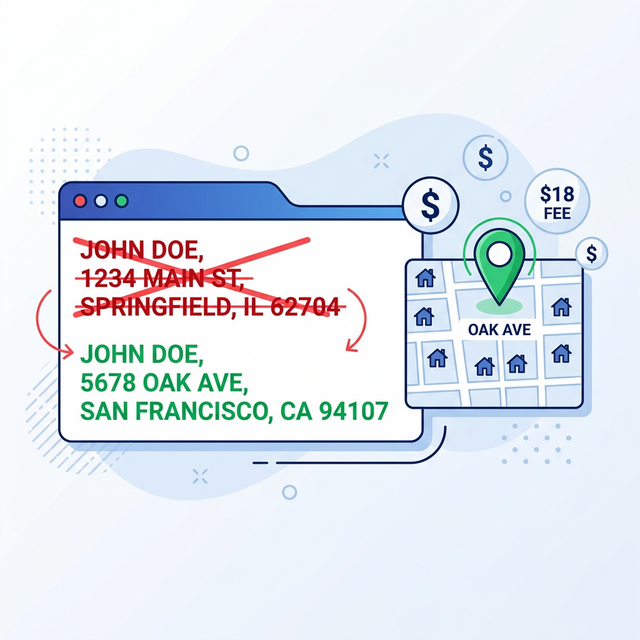
An address correction charge is a fee applied when a carrier modifies the delivery address on a package after it enters their network. This happens when the address you provided is incorrect, incomplete, or doesn’t match the carrier’s database.
2026 Address Correction Rates
| Carrier | Charge |
|---|---|
| UPS | $18.00 per package |
| FedEx | $21.00 per package |
These fees apply per package, not per shipment. If you ship five packages to the same incorrect address, you’ll be charged five correction fees.
What Triggers an Address Correction?
1. Incorrect Zip Code
The most common trigger. If the zip code doesn’t match the city and state, the carrier corrects it and charges the fee.
2. Residential/Commercial Reclassification
When you label a package as commercial but the carrier’s database classifies the address as residential (or vice versa), this counts as a correction — and triggers both the correction fee and the residential surcharge if applicable.
3. Missing or Wrong Suite/Apartment Number
Incomplete addresses missing unit numbers, suite numbers, or floor designations.
4. Outdated Addresses
Addresses that were valid when entered but have since been rezoned, renamed, or consolidated by USPS.
5. PO Box Conflicts
Sending a UPS or FedEx package to a PO Box (which they can’t deliver to) triggers a correction to the physical street address if one is on file.
The Hidden Cost Beyond the Fee
Address corrections don’t just cost you the correction fee — they can also:
- Delay delivery by 1–2 days while the carrier researches the correct address
- Trigger additional surcharges (residential, DAS) if the corrected address is in a different classification
- Increase your correction rate metric with the carrier, potentially affecting contract negotiations
How to Prevent Address Corrections
1. Validate Addresses at Checkout
The most effective solution. Use an address validation API (USPS, Google, Smarty, Melissa) to verify and standardize addresses before they enter your system.
Most validation services:
- Correct typos and abbreviations
- Add missing zip+4 codes
- Flag undeliverable addresses
- Identify residential vs. commercial classification
2. Use USPS CASS-Certified Validation
CASS (Coding Accuracy Support System) certification means the validation service meets USPS standards for address accuracy. CASS-certified addresses are far less likely to trigger carrier corrections.
3. Standardize Address Formats
Ensure all addresses follow USPS formatting standards:
- Use approved abbreviations (St, Ave, Blvd)
- Include directional prefixes/suffixes (N, S, E, W)
- Include suite/unit numbers on Address Line 2
4. Monitor Your Correction Rate
Track the percentage of packages that receive address corrections. If it exceeds 1–2%, investigate the source — it’s often a specific sales channel, data import, or customer entry form.
5. Audit Corrections for Errors
Not all carrier corrections are valid. If a carrier corrects an address that was already correct, you can dispute the charge. Common false corrections include:
- Correct addresses flagged due to database lag
- Multi-tenant buildings where the carrier database is outdated
- New construction addresses not yet in carrier systems
Negotiating Address Correction Fees
Address correction charges are negotiable in carrier agreements:
| Published | Negotiated (example) | Savings |
|---|---|---|
| $18.00 (UPS) | $12.00 | 33% |
| $21.00 (FedEx) | $14.00 | 33% |
Some agreements include a correction fee waiver for the first few corrections per period, or a cap on the maximum number of chargeable corrections.
The Bottom Line
Address correction charges are almost entirely preventable. A $200/year address validation service can save thousands in correction fees, delivery delays, and downstream surcharges. If you’re shipping more than 500 packages per month and not validating addresses at the point of entry, this should be an immediate priority.
Want to see how much address corrections are costing you? Upload one invoice to ShipMint’s Instant Analysis for a complete surcharge breakdown — free.