Every January, UPS and FedEx announce their General Rate Increases (GRIs) — and every January, most shippers glance at the headline number and move on. This year’s announced average of 5.9% sounds manageable. But here’s the thing: the average is a lie.
Why the Headline Number Doesn’t Tell the Full Story
When carriers announce a “5.9% average increase,” they’re averaging across hundreds of service-zone-weight combinations. The actual impact on your shipping profile depends entirely on what you ship, where you ship it, and which surcharges apply.
Here’s what we found when we analyzed real invoices from ShipMint customers:
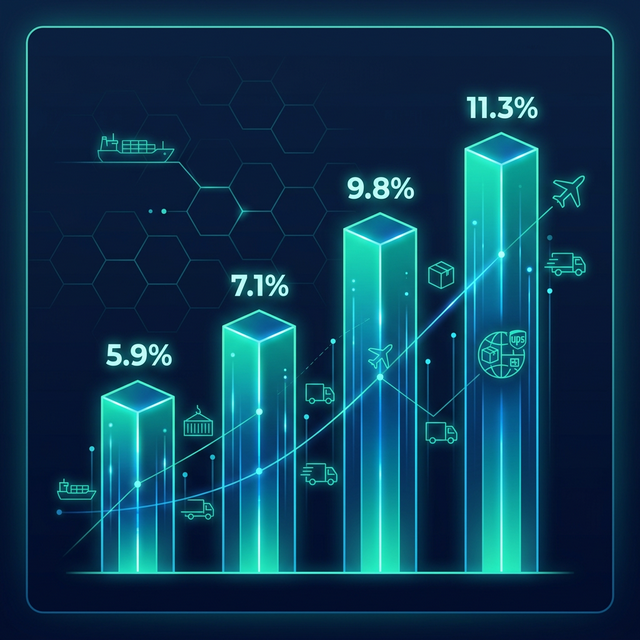
| Shipping Profile | Announced GRI | Actual Impact |
|---|---|---|
| Lightweight e-commerce (1–5 lbs, zones 2–4) | 5.9% | 4.2% |
| Mid-weight DTC (5–20 lbs, mixed zones) | 5.9% | 7.1% |
| Heavy B2B (20–70 lbs, long zones) | 5.9% | 9.8% |
| High residential delivery mix | 5.9% | 11.3% |
The pattern is clear: heavier packages shipped longer distances with residential delivery surcharges are hit hardest — and the announced average significantly understates the real cost increase for those shippers.
The Surcharge Multiplier Effect
What makes GRIs particularly painful in 2026 is the compounding effect of surcharge increases. This year’s surcharge adjustments include:
- Residential delivery surcharge: Up 7.5% (now $6.55 per package for UPS Ground)
- Additional handling: Up 8.2% for oversize packages
- Fuel surcharge index: Adjusted to capture more revenue at lower fuel price thresholds
- Demand surcharges: Extended through Q1 with new peak season windows
For a shipper spending $50,000/month with 60% residential delivery, the surcharge increases alone add $2,340/month before the base rate GRI even kicks in.
What Smart Shippers Are Doing About It
The shippers who weather GRIs best aren’t the ones who simply absorb the increase — they’re the ones who use the announcement as a catalyst for action:
1. Benchmark Before You Negotiate
If you don’t know where your rates stand relative to the market, you’re negotiating blind. ShipMint’s contract intelligence module benchmarks your rates against 5 market segments — so you know exactly which discounts are below median and where you have the most leverage.
2. Audit Every Invoice
GRI season is when billing errors spike. New rate tables, updated surcharge schedules, and system changes create opportunities for overcharges. Our audit engine scans every invoice across 6 categories, catching errors that would otherwise go unnoticed.
3. Model the Impact Before It Hits
Don’t wait until February invoices arrive to see the damage. Upload your most recent invoice to ShipMint’s Instant Analysis tool and see exactly how the new rates affect your specific shipping profile — free, in under 60 seconds.
4. Use Competitive Pressure
If you ship with both UPS and FedEx, now is the time to play them against each other. ShipMint’s AI Assistant can help you build a negotiation playbook with specific talking points based on your spend data and market positioning.
The Bottom Line
A 5.9% GRI doesn’t mean your costs go up 5.9%. For many mid-market shippers, the real impact is 7–12% when surcharge increases and profile-specific rate table changes are factored in. The difference between absorbing that increase and negotiating it down is often six figures annually.
Don’t guess. See your actual exposure →